Client Success Story: Forgotten Harvest
Forgotten Harvest’s longtime mission is to help people overcome food insecurity, and the crux of its method is to rescue surplus food from grocery stores, restaurants, caterers, etc., who would otherwise discard it.
It’s a great mission, and a great way to accomplish it. But several years ago, Forgotten Harvest’s leaders realized there might be a better way to do it – although it would require more facility capacity, which would necessitate an ambitious capital campaign.
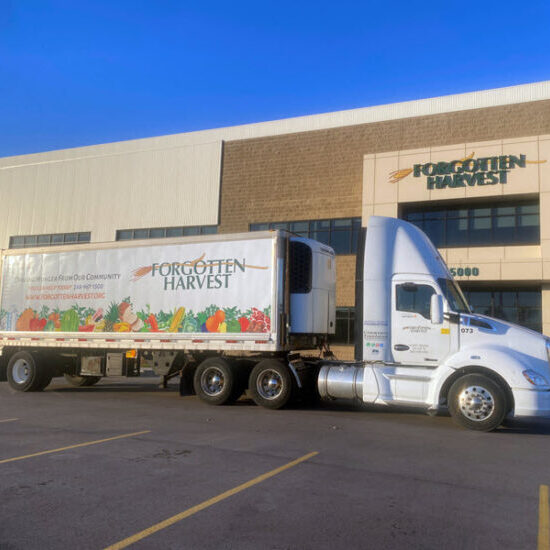
Up to this point, Forgotten Harvest trucks picked up whatever surplus food was available and brought it to emergency food providers throughout metro Detroit. If grocery store A could offer bread, onions and cupcakes, then the truck would pick up the bread, onions and cupcakes and bring them to the emergency food providers on their appointed route.
But Forgotten Harvest’s leaders started to envision a system that would add value to consumers who relied upon this food. In this vision, team members would bring the rescued food back to the Forgotten Harvest warehouse, and sort and package the food into a complete and healthy mix. That way the recipients wouldn’t face the challenge of pulling together onions, cupcakes and various other items to create the right combination of foods to feed themselves or their families.
It would already be done, and they could enjoy peace of mind with their meals.
It was a great idea, and a definite step forward for Forgotten Harvest’s mission. But the organization’s existing warehouse wasn’t suitable for the additional work – they needed a bigger facility. And it would only come to fruition through a successful capital campaign that could fund the purchase of an existing facility or the construction of a new one, as well as enhance Forgotten Harvest’s infrastructure to accomplish this expanded vision.
At this point, they invited Hammond & Associates to conduct a feasibility study for the proposed $10 million campaign.
Through confidential interviews with existing donors and key community leaders, plus a deep dive into Forgotten Harvest’s image, positioning and historic financial position, Hammond delivered a report indicating that achieving their vision was possible, but there were some issues that needed to be addressed first to ensure campaign success.
“We knew they could raise the money, but it would take some explaining to their constituency before they were ready to make the gifts of size needed for success,” says Hammond & Associates partner Virginia Fallis. “They would need to take their story on the road and do a whole bunch of information sessions – bringing their constituents and others together. At the same time, they needed to refine their campaign elements and build awareness to a broader audience.”
Forgotten Harvest followed the advice and invested considerable time on these information sessions, while also locating a site, broadening their image and engaging their Board more deeply in this readiness work.
By the time the now $14 million capital campaign started, the community had a good understanding of how the money would be used and why. Hammond & Associates continued its relationship with Forgotten Harvest by providing campaign counsel.
Forgotten Harvest had also recruited remarkable fundraising leadership willing to put their names at the top of the campaign and lend their credibility to the effort. They also made the important and wise decision to make their own gift commitments up front before soliciting anyone else.
“In the end, they raised $17 million,” Fallis recalls. “They built this amazing new facility in Oak Park and transformed their food delivery system. It was a textbook example of commissioning a feasibility study and then following the plan effectively. By the time they made the first ask, the seeds had been planted.”
The success of the campaign included a combination of regular donors increasing their giving, new donors getting on board and a few large gifts that no one had anticipated.
Today the facility is put to even better use, as the knowledge and technology at Forgotten Harvest allows the organization to be even more precise in identifying where in the region food insecurity exists.
“We had an engaged board, visionary leadership and a smart head of development to work with,” Fallis says. “That made a big difference. They knew we should test whether the idea resonated with their community before we went headlong into it. And because we did that work and found the answers we needed, the campaign was a big success.”